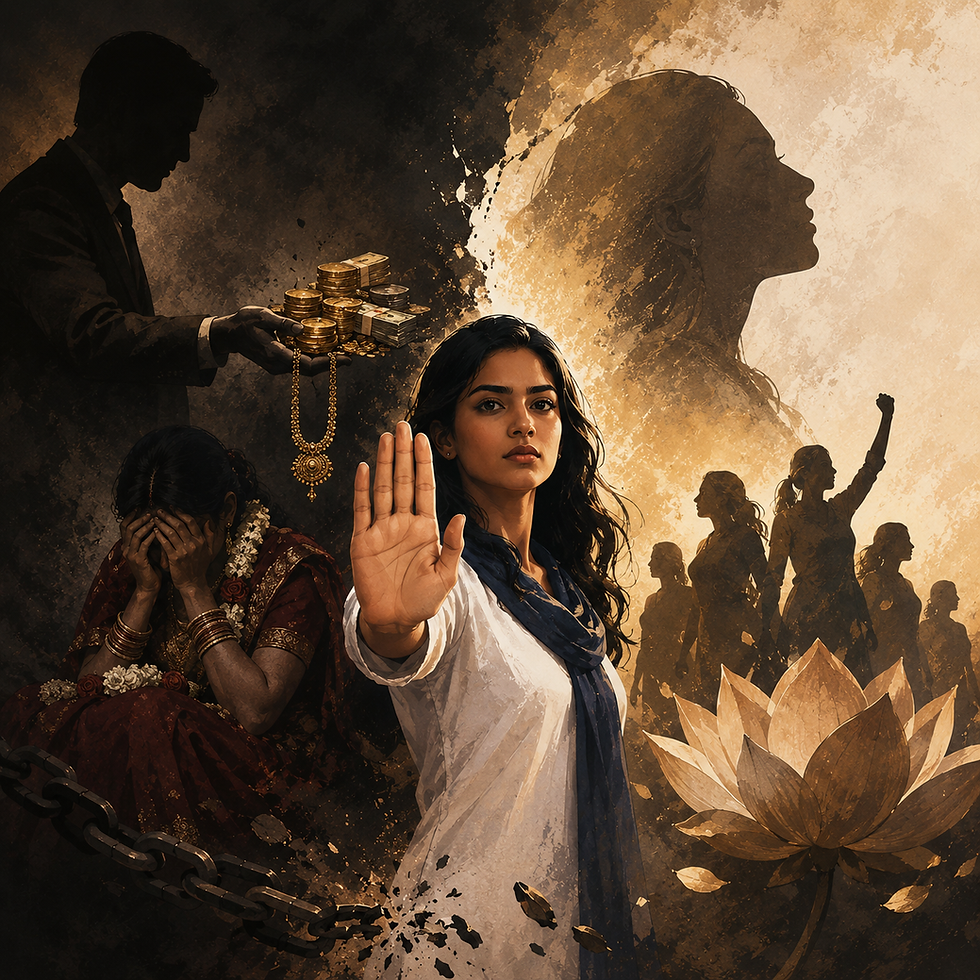
Dear Law, Meet Her !! - PRIYANKA A


Let's play a quick game! Close your eyes and imagine a farmer.
Be honest... you probably pictured a man wearing a dhoti, carrying a plough or standing in a green field. Right? Now here's the plot twist.
The woman beside him the one sowing seeds, transplanting paddy, feeding cattle, harvesting crops and somehow still managing the entire household is often not recognised as the farmer.
Funny? Not really.
In India, millions of women spend their lives doing agricultural work but when it comes to legal records, government schemes, crop insurance or bank loans and the question suddenly becomes but whose name is on the land? And that's where the law quietly says, "Sorry, I only know the owner." Recently, the idea of legally recognising women as farmers has started gaining attention. Honestly, it's about time. But here's another question if we finally call her a "farmer," does everything magically change? Not quite.
Giving someone a legal title without giving them equal access to land, credit, insurance or decisions making is like giving them the steering wheel but forgetting the car. The Constitution promises equality. It tells us that discrimination has no place in a democracy. Yet, in agriculture, equality often stops at the farm gate. Women work the same fields, face the same risks and contribute just as much to India's food security, but many still struggle to claim the legal rights that come with being recognised as a farmer.
And here's the irony: if the crops fail, everyone says, "Our farmers are suffering." But when benefits are distributed suddenly the woman who spent months in that same field becomes "just helping the family." Helping?
That's like saying the person who wrote the entire assignment was "just assisting."
Real change will happen only when women have equal rights over land, easier access to financial support and a genuine voice in agricultural decisions. Because if someone can grow the food that feeds an entire country, least the law can do is recognise her as more than "The farmer's wife”, which is the current status of legal system.
Maybe it's time we stopped asking, "Who owns the land?" and started asking, "Who actually keeps it alive?"